August 27, 2013

Grasse weekend part II: Musée International de la Parfumerie

The Fragonard museum(s) offer much insight and value but it is only natural that a town like Grasse should have a really good museum about perfume and perfumery that is not linked specifically to one company. In this case, it is the Musée International de la Parfumerie (just next to Fragonard). It is an impressive must-go-to that takes you through the history of perfume from the Egyptian masters to contemporary niche and mass-market brands including descriptions of work processes, production and noses.

A perfumer's "desk" with raw materials and scales. 
The path through the museum is designed in a very pedagogic way that starts with some basic scientific facts about our sense of smell, some raw materials and other facts.

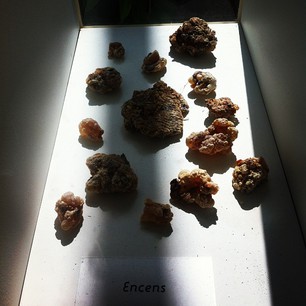
Raw materials: encens.

Vanilla.
As you proceed through different rooms you can learn about the masters of religious scents in ancient Egypt and how our use of scents and perfumes can be traced back to their processes and rituals. Scent has been used as a way to connect to higher powers, as medicine and remedy and as seduction throughout the course of history. 

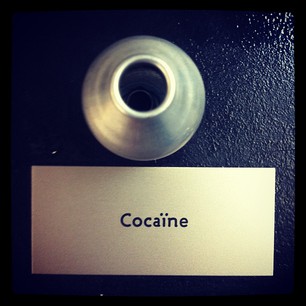
In the museum you also see all the accessories and tools that have been used for scented rituals and habits.

There is an extensive space dedicated to information and installations about the production of raw materials and fragrances, This of course given as this industry has been the spine of the history and development of Grasse. 

Chanel use flowers from Grasse in their perfumes. 
Musée International de la Parfumerie is a destination really worth the time. It covers many aspects of the world of perfume and it is obvious that there is a genuine ambition to cater to the needs of many different kinds of visitors so the exhibitions feature both objects, graphics, interactive elements and informative texts. 


Interactive smell machines.
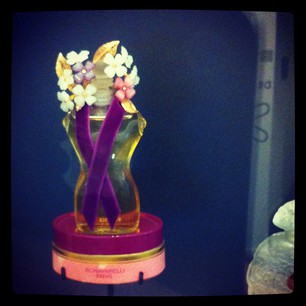
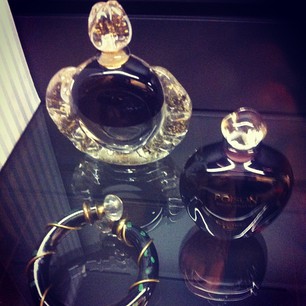
There is a big space dedicated to perfume packaging with bottles from all eras and styles you can imagine. This part is very inspiring and impressive and rewarding for anyone interested in either perfume or design generally. I leave you with some of my favorites. 

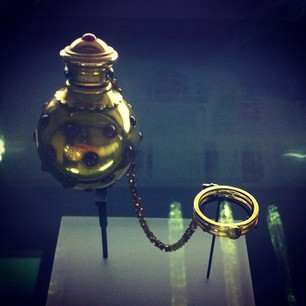
Perfume jewellery, ring and container.

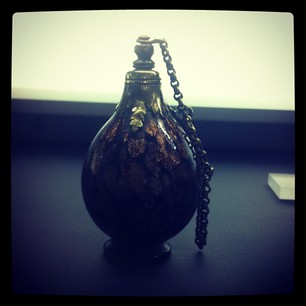
Beautiful work on perfume container.

Elsa Schiaparelli. Sensational!

Poison packaging. The bracelet!!

Amazing muguet glass work.

Why do we never get this anymore?

Epic cologne.


August 26, 2013

Weekend in Grasse part I: success at Beauty Success

This weekend we had an opportunity to enjoy the treasures of Grasse more than during the weekdays since we are in school at Grasse Institute of Perfumery from morning to around 5 pm.

After a week of smelling you would think we would be tired of olfactory sensations but that is just not the case. So when our initial plan of going to the coast got cancelled because no buses were driving due to a procession celebrating the liberation of Grasse we quickly adjusted a plan to local adventures.

One week of smelling in paper strips. The luxury!

Our first stop was the perfumerie Beauty Success. Maybe you can imagine that in Grasse a perfumery with top-sellers is actually quite unusual. It is much easier to find essential oils and local perfumers and their perfumes. From the outside and at first glance Beauty Success looks like just another perfumery really but when you enter you see that they offer an impressive range considering the store is not that big. And - most importantly you can also find some true treasures. I found three.

The first I noticed on my first visit a few days ago, Coriandre by Jean Couturier from 1973. Two gift boxes. The reason they attracted my attention is that I have a friend in Stockholm whose mother wore it when she was a child. This is not a bottle you will se very often in stores, I have not seen it ever (!) so obviously I had to buy it to bring home with me for my friend so that she and her mother could do some sensory time-travelling. 


1973.

The second treasure was the epic Pour un Homme by Caron, originally launched in 1934. It has a very minimalistic composition with just lavender, vanilla and musk. A treasure and a kind of male fragrance that we just don't find anymore. If it were launched today I am quite sure it would be unisex.


My third purchase was a less rare one, but a favorite of mine – Voyage for Hermès by Jean-Claude Ellena. I wear this fragrance a lot and have given it to several persons dear to me. I have the eau de toilette and deodorant but at Beauty Success they had a really nice gently scented “baume hydratant” which I have never either seen or noticed. Perfect. 

One of the best things about Beauty Success is the lady who owns it. After I paid for my purchase she asked me if I wanted her “to perfume me”. I was not quite sure what exactly she meant and I have actually never received this question like that before, so I got curious and asked her. My reward for my curiosity was the most brilliant explanation about how a person that sells perfume should – on a very concrete level – perfume the customer (if the customer says yes). Most things sounded very obvious when she said them but I am painfully aware that many many many individuals who work in retail do not think about these things. Short version with the main ones: 

  • Do not spray the front and especially never the décolletage but rather sides and back 
  • Be careful with glasses (that means do not spray on them)
  • Be careful with jewelry (that means do not spray on it)
  • Do not spray on the clothes of a customer wearing delicate fabrics such as silk
  • Spray lightly 

I know – it sounds self-explanatory. But tell me you have never seen or experienced mistakes with these details?

Something about Grasse... My guess is that if you are a reader of a perfume blog the name sounds familiar. Grasse is known as the world's capital of perfume but the local perfume industry started with leather tanning in the Middle Ages. Galimard, a tanner in Grasse started to scent leather gloves which smelled badly and after he offered a pair to Catherina de Medici the city's olfactory destiny was sealed. The perfume industry soon became the main activity as the local leather industry decreased while the demand for scents made from local flowers such as lavender, rose, jasmine and mimosa increased rapidly. 


Jasmine.

Grasse is a town in Provence, the part of Provence called Alpes-Maritimes and just about 53,000 persons live here. Many of the world's noses come from this region or have been trained here and most of France's natural aromas come from fields around Grasse. An example is jasmine, a key ingredient in fine perfumery. The roses used in the extract version of Chanel no 5 also come from Grasse. The main perfume destinations for visitors to Grasse are:

• Galimard Perfumery, established in 1747 by Jean de Galimard who provided the royal court with perfumes.

• Molinard, established in 1849 and famous for perfume bottles made of Baccarat crystal and Lalique glass.

• The Fragonard Perfumery, established in 1926 in one of the oldest factories in the city.

• Musée International de la Parfumerie - International Perfume Museum. The museum has exhibitions that show the evolution of techniques during the 5,000 year history of perfumery.

And just outside the city centre, you will also find Grasse Institute of Perfumery where I spend my happy days right now smelling paper strip after paper strip of marvel and experimenting in the lab with own creations.


Sometimes it feels like we are in a movie.

August 25, 2013

Lavender or lavandine and our magic days with Laurence

We always have the same teacher, Laurence Fauvel, so you can imagine how much she influences our experience. Laurence is great. Apart from her expertise, she is also funny, kind, generous and seems to always find the right balance between guidance and freedom to create. During these days we get access to so many parts of the perfume world, it’s not only the never-ending raw materials but also practical details about the working process for a professional perfumer or evaluator and about the business.


An example of a day at school (for new readers: I am talking about the summer course at Grasse Institute of Perfumery) is that we start with a test. This means that Laurence gives us ten raw materials (can be both natural and synthetic) on paper strips and we have to conclude which ones they are. We have our noses of course, but at our stage it is also essential to have good notes for example to remember how to separate the natural lavender from the synthetic lavandine or the various citrus fruits. It is still quite often that we mix some specific ones up when they come on a separate strip – but when you get two strips with one on each it usually seems obvious which one is which. This is an example why the notes are important – there is always some difference and there might be a tiny detail that is a personal reflection and this will help you remember.

I love the tests, they are a moment to really go deep into detailed perception and cherish the nuances of things. And you know how I feel, perfume is like life, life is like perfume. During the test I also think we stimulate our curiosity through new discoveries while at the same time discovering some personal preferences. It is very interesting how previous experiences and memory affect the initial reaction to a new smell – for example we had seaweed in a test. For me it reminded me of a bath room on a beach, for someone else a pleasant walk on a beach and for another person it was a smell related to food. When we exchange associations in class we can approach the materials from new perspectives and rediscover them. I read a book by Rachel Herz before Grasse about olfactory psychology where there are many interesting things about this – I will write a separate post on this when I come home.


Some notes instantly feel so inspiring every time they appear under the nose. Vetiver makes me want to go straight to the lab and experiment. I love cedarwood and petitgrain and ambroxan (I still have not smelled real ambergris, this is becoming a life mission!). I have less spontaneous affection for many florals and more for spices and woods. Also I often feel a preference for most naturals even though understand and appreciate the possibilities that synthetics offer. But for example vanilla and vanillin… you do get a very rewarding instant softness with vanillin, but real vanilla has so much more integrity and nuances and is unruly. The naturals always feel a bit unruly and I love that. Again, perfume and life.

After the test we smell more, for example we compare naturals to corresponding synthetics or notes that we find it more difficult to separate. We have also analyzed popular perfumes that are on the market which is great fun under the guidance of Laurence.


We have spent two afternoons on creation during the last week and this has been just amazing really. Some in the group have made formulas before but for me the entire situation was new – from pipettes to counting grams. The idea part however felt very natural, I have been walking around with note combinations in my head for a long time but never had the opportunity to physically sit down and create them. Even on our very very basic level it is an extra-ordinary experience to have an idea in your head, smell the raw materials in our bottles and then get to actually make a formula trying out the right proportions (very small quantities make a very big difference) and make it. This week our two creations were an eau de cologne and a fougère. Laurence gave us a base and then we could add raw materials with her guidance regarding amounts. To find the exact proportions is really a challenge and it is an intricate adventure to predict how the formula will evolve. At this point it astounds me how a perfumer can orchestrate the notes with the precision that some masters do and control the transitions over time. I will tell you more about on of my creations in a separate post.

At the end of this day we have an evaluation where everyone smells everyone’s creation and we discuss and get feedback and advise from Laurence. At this point we have been at school for about eight hours. Normally at the end of a day I would be a bit tired and want to go home. Here I keep finding myself thinking “oh, now I have to wait to tomorrow to smell more…”. I am very happy in this experience that I am having right now.

August 22, 2013

Another day in olfaction paradise

We learn so many things every day... Every morning we smell ten paper strips with raw material like a test, we have to tell what is on the strip. Rosey is not rose. Rose is oil or absolute and it comes from Grasse, Turkey or Bulgaria. In this room life gets so many nuances. It moves me. Some raw materials appear similar in our minds - then we get them on separate strips at the same time and we understand exactly. The contrasts between naturals and synthetics are extra-ordinary. Something we think that we know and know in a certain way, like a blackcurrant, has so much depth and darkness and beautiful strangeness.


Fir balsam, childhood memories.

Everyday new raw materials are added to our collection. We talk about our associations to them. Our memories. Today I had a moment where a raw material I had never smelled separated suddenly catapulted me back to my childhood in my grandparents home as I was reminded of wood shavings. We have different references and different terminology and this creates a really rewarding atmosphere.

Oh and vetiver... Every day with vetiver is a better day.

Tomorrow we are going to visit the jasmine fields. But first I have to take control over my notes. And sleep.


I cannot wait to wake up so I can go smell things again.


Moon over Grasse.


August 19, 2013

Jasmine

Picked some on the way home with a lovely new friend from the course after she told me that in her family in Spain they always picked fresh jasmine to have in the bedroom during a warm night because it smells amazing. Now my room smells amazing.


"Everything is important"...

...our teacher Laurence keeps reminding us of this and I love it every time.

I am in Grasse for a two-week course at Grasse Institute of Perfumery, GIP. Actually I started this trip three years ago when I wrote to the school to ask if there were places available. I didn't go then, life took a different path and led to me to other priorities. But now I am here and today was the first day. We are eleven students from all over the world and with different perspectives on perfume which creates a very interesting setting for discussions. And we have Laurence, I could not imagine a better teacher.

We spent a big part of the day smelling separate notes from different olfactive categories and Laurence told us how they are used, practical significant things like prices and how they affect creation and gave us fantastic insight into the work of a perfumer. We also looked at the differences between naturals and synthetics, this was absolutely fascinating. Both to hear about strengths and weaknesses with both and to compare by smelling.

No matter how much one reads and thinks and smells perfumes there is nothing that can substitute the enormous privilege of having a real lab with so many notes of such quality to discover separately. This is such a luxury. I cannot wait for tomorrow. As Laurence says, "At 9 o'clock we smell".

I will share more with you during these next two weeks, I am just so overwhelmed today that I do not know where to start. I don't know how many of you reading this have had the experience of brining out a private passion into the spotlight and just doing it, making it concrete, booking that thing you dream about doing and going there. It is a sacred experience. I feel privileged that I can do this and grateful for being here.

To be continued... I leave you with some photos from yesterday and today and wish you whatever it is that you need - money, confidence, support, timing or other - to follow your inner dream and let it take you to really special moments in your life. Sometimes it is closer than we think.

A special thanks to Clayton at What Men Should Smell Like (is there any perfume blog better than this!?)  for some much appreciated preparation support.


Treasures.

Bought some old perfume posters in the old town.

Very motivated student!

The luxury of all this there to discover...
There is a shop here with only vintage flacons...

August 11, 2013

Where it's all coming from


During the last couple of months I have noticed this blog has a lot of new visitors. Welcome! I don’t expect any of you readers to go on a historical safari through old posts (although I notice some do posts do get a second, third, seventeenth life which feels great) so I thought I would take a moment to introduce myself a little bit to new acquaintances and maybe connect some dots for some returning readers. So this will be a slightly more personal post that might answer some questions about where topics and details on Sense of Scent come from.

My interest in perfume is in fact rather an interest in olfactory perception, or the sense of smell, in general. This, is part of an interest in how our senses work, which of course is a big part of how we work as humans. Why do we do what we do?  What do we notice, what does it mean to us and why. The eternal metaphysical or psychological quest, trying to figure others and oneself out. (And yes, I have numerous times wondered why I did not major in Psychology because this field always attracted me.) I think I am interested in perfumes for some of the same reasons why I am interested in communication (which has been my career path my entire adult life) – I am fascinated by how we define ourselves to ourselves and to others. Like many others interested in scents I was brought up in a family where senses where always present. I was taught to trust my senses when choosing meat or vegetables, to experience places with eyes and nose, to feel materials for house construction with my fingertips - stone, wood... To smell the air in order to predict rain and to never wear clothes that didn't feel good against my skin. I was encouraged to use my senses and to trust them. This has had a major impact on my personality and life and is something I believe in when it comes to guiding children through life.

When it comes to the sense of smell, it is an unquestionable fact that we are affected by smells and that this influences our relations and perception and evaluation in daily life. It has been like this for as long as humans have existed, our sense of smell has been essential for our survival capacity. We are affected by olfactory impressions. They influence our moods, energy levels, associations, feelings and more. So the situations in which we choose smells, for example when applying perfume and when buying/choosing perfume are really interesting. There are more or less conscious choices, there are more or less informed choices. But no choices are arbitrary and every time we apply a smell on our skin, that will affect us and people we meet for hours, it is a choice. Why does one person choose something transparent and another one something forceful? Why does one person want to smell like a walk in the forest and another like a spicy old church (no judgement, I like both!)? Not to mention how mass-market perfume sales reflect zeitgeist in terms of gender issues and other aspects. I find this fascinating.

Now from a communications and marketing point of view I am intrigued by the big black hole between the fragrance industry and the consumer. Perfumes are a product created with much skill, it requires time and an aesthetic endeavor. Perfume is a fairly expensive product to purchase. And yet the industry is quite bad in most cases at educating the consumer and sharing its knowledge and intentions. So we have a market full of consumers that don’t really know what they are buying or how they should go about choosing which product is right for them. And retail personnel do not always have sufficient tools to provide adequate support. I am talking mainly about the mass-market now. Which is what the majority of consumers see. Now we also have a parallel fragrance world created by numerous independent niche companies. Generally this is the market that I am more interested in because I see that these perfume companies are leading the way when it comes to customer relationships, intelligent brand work and communication. Helping people discover this perfume world is a privilege.

A couple of years ago I started writing this blog mainly to inspire (and put pressure on) myself to learn more and because I felt a desire to do something concrete and professional with this personal interest. I wasn’t really sure what my designated perfume path would be so I thought this would be a way to discover that step by step. In the last two years the blog has lead to some seminars, some freelance writing and a number of private consultations. I have gotten to know amazing people thanks to this and have had many inspiring experiences and thought exchanges. My profile has also formed itself a bit more and I do feel that I feel most likely will work in some way with scents for the rest of my life.

Some day I would definitely like to create fragrances, but it is not the most ardent dream or priority right now. I would however love to work with marketing and communication for a perfume brand that I believe in and who believe in a less excluding way of doing things. I get a genuine kick out of helping people with curiosity but limited knowledge to discover the world of scents. Many perfume bloggers are enormously knowledgeable and if you follow some blogs I am sure that you like me are impressed with their encyclopedic minds. I have at times felt a pressure to deliver in a way suitable to those eyes in this blog, which has occasionally paralyzed me a bit. Because what I initially and in many ways still want to do is to write for those who have no idea how to find a perfume, where to even start. Those who have never experienced finding a fragrance that feels really personal or found their scented style. I never get tired of talking about top notes, base notes and why a cologne always smells in a certain way or why a perfume does not feel right when you come home with it after having tried it for 15 minutes before buying. I love love love helping someone find their personality in the language of scent, translate their descriptions of themselves into olfactory notes. This means that if at this point I was offered to choose between making a perfume or writing a book I would choose the book. And among my long-term plans is to learn more about the neurological and psychological aspects of the sense of smell in order to someday work with scents as a therapeutic tool for example with people suffering from traumatic experiences, grief or Alzheimer, autism…I don't know yet exactly. I suppose my perspective puts me in a crossroad between art and science.  I like that crossroad. They are lovers, science and art.

It is not likely that you will find me writing reviews here, although I do choose to highlight perfumes, perfumers, perfume brands that I find inspiring. I rarely write about perfumes or perfumers that I don’t like if not for some specific reason. There is so much to spend time thinking about and I prefer to look for the stories that inspire me and that I think deserve some spotlight.

I am very honored that you are here, that you spent the time it took to read the reflections above and I hope that if you follow my scented journey through life I will have the occasion to inspire and enlighten you at least once. If you have a question or want to share a thought on scents I will always be happy to read it, my email is s.z@lefumoir.com You can also connect through twitter or facebook.

I wish you a new week full of scentful sensations. 


August 8, 2013

Come to the dark side, there is eternal honey…

Insects have the most acute sense of smell in all nature and used it for all sorts of physical courtship. A queen bee attracts drone males with an indisputably welcoming scent from a gland in her mouth. In an experiment scientists harvested this scent and put it on a flying balloon. Drones clung to the balloon in layers desperate to mate. No wonder the queen bees are not exactly humble… The same gland produces another pheromone that worker bees take from the queen and distribute to female workers bees. The effect it has on these is that their reproduction ability is killed. This means that there will never be another queen bee competing for the spotlight until the first one has died and stopped distributing her pheromones.

pinterest.com/pin/62980094758592720/

There are more than twenty thousand species of bees but only a couple of them can make honey. They make it by using nectar from flowers. Honey is actually partially digested food that bees store in the hive during winter when no nectar is available. It takes about ten worker honey bees to make one tea spoon of honey and each bee’s contribution to that tea spoon corresponds to the amount of honey it will produce during its lifetime. In 2006, honey bees suddenly started to disappear in the US. When this was discovered a more careful monitoring of the honeybees was conducted and soon it was clear that this was a global phenomenon. This phenomenon was named Colony Collapsed Disorder. It affected the honey supply of course, but also all crops globally that are pollinated by bees. It is still not entirely clear how this started but research indicates that is has to do with pesticides severely affecting the nervous and immune systems of the bees.

Cave paintings in Valencia, Spain, seem to reveal that humans have been harvesting honey for at least 15,000 years. Bees have been producing honey for about 150 million years.


Mesolithic rock painting of a honey hunter harvesting honey and wax from a bees nest in a tree. At Cuevas de la Araña en Bicorp.

Honey almost sounds too obviously “nice” to be perceived as something interesting enough to analyze and be seduced by. It is enormously attractive visually of course, like liquid jewellery. But still, it is also something we associate with tea and honey and home made facial masks, right? Honey does play an interesting role in perfume though and can be found in an impressively wide range of fragrances. And the history of honey is mesmerizing and impressive. Yet we tend to not really speak about it that much in perfume contexts. Why is that? Honey seems to be like the pretty smiling well-composed sister that gets forgotten at the family dinner because the little magnates, monsters, delinquents, clowns, professors and divas demand all the attention. But we should not forget about honey. Honey is sweetness with attitude and patina.

pinterest.com/pin/271693789991704744/

Honey is versatile and interesting. In daily life it is a wonderful sweetener but also has health benefits. Honey builds up our immune system, soothes sore throats, fights with bacteria, viruses and fungi and helps with hangovers. Phytonutrients found in honey seem to possess cancer-preventing and anti-tumor properties, and may improve blood sugar control and insulin sensitivity.

When used in perfume the honey note is sweet in a soft and balsamic way, soothing. The scent can vary from woodsy to floral, herbal or tobacco-scented. It is often used as a prelude to the gourmand character of a fragrance. The honey used in perfumery is typically created from beeswax and molecular ingredients found in organic honey.

Melting beeswax. pinterest.com/pin/1407443603097640/

You’ll find honey in an epic olfactory diva like Dior's Poison but also in Jo Malone’s youthful Nectarine Blossom & Honey and in Chanel’s Beige. And in a very unfrightening cosy Honey I washed the kids. In Acqua di Cuba by Santa Maria Novella honey is combined with herbs, tobacco and citrus. It is a warm fragrance, slightly spicy with a vanilla base. If you are into Serge Lutens look for Miel de Bois and A La Nuit. There’s an interesting discussion on Miel de Bois here. One of my personal favorites, Ambre Narguilé by Jean-Claude Ellena, also has a honey in a sultry olfactory performance that is nothing for a shy day. Another gourmand honey fragrance is Thierry Mugler’s Angel, brilliantly exposed by The Perfumed Dandy. To get to know TPD's world - and honey analysis - better, just click anywhere on the eloquent area below. (And for a female Dandy, do check out the review from Olfactoria's Travel of La Dandy).

Other honey fragrances and thoughts of them can be found here: Hedonist by Viktoria Minya, Perfum de Luxe from enchanting DSH reviewed by the lovely Sigrun and the exquisite dark unusual M/Mink from Byredo. 

Honey can be kept for thousands of years without losing its qualities. An extra-ordinary example of this is the honey found in Tutankhamen’s tomb which was still edible after more than 2,000 years. Honey is mentioned as a symbol of good things in many sacred writings. In Hinduism it is considered as one of the five elixirs of immortality in Hinduism. The Promised Land, Canaan, is “a land flowing with milk and honey.” The word “honey” itself reveals a powerful, sacral significance. This word originates from the ancient Hebrew word for “enchant.” Honey is considered kosher, even though it is produced by non-kosher beings. The explanation for this can be found in the fact that bees during Biblical times were wild bees who carried nectar from flowers to hives for storage in the shape of sweet liquid gold. Beekeeping was developed long after this. And honey, the liquid sacred sweet gold, will be around long after this...


July 30, 2013

Dear patient reader,

So sorry I've been a bit quiet here. I got stuck somewhere between writing jobs and researching for posts that made me feel like I never researched enough. And then I have decided to give that old dream of writing a book about scent/perfume a try. I try to write things from a personal perspective and avoid reviewing, others do that better. It is my ambition to find a path that combines a general discussion about scents from a psychological and aesthetic perspective - with detail touchdowns such as a certain perfume or note or environment. During these times when I get stuck in research clouds I do warmly invite you to join in the more fast-paced Twitter and Facebook where I post shorter thoughts and interesting stuff on a daily basis.

By the way... I am packing for a trip to Grasse where I will be at school for a couple of weeks. I so look forward to learning new things. The world of scents is one of constant new beginnings. I look forward to feeling like I still have so much to learn when I am old.

I'll be back soon. In the meantime, join me for some magic in the form of BBC:s documentary.


Also, I know that some of you are returning visitors and you come from all over the world. I would love to know who you are, your thoughts on perfume, what you would like to read about. Drop me a line?

/S.

July 1, 2013

Lavender

Have you ever picked fresh lavender? When it is halfway between buds and flowers and the leaves are velvet soft? You can detect so many difference scents in it then... That obvious lavender smell we all recognize is not there, instead there is a variety of things going on... Try it. I could name about ten-fifteen different smells. What about you? 


Lavender is a somewhat underestimated scent. It has been used in so many contexts that it has almost become a cliché and unfortunately the market is so over-whelmed with what pretends to be lavender scent that we have almost forgotten the real deal and how that smells. It does not smell like sleep - in fact lavender increases your ability to solve problems because of the effect it has on the brain when you smell it. And there are many lavender products out there that smell fresh, elegant and manly and not like Laura Ashley duvet. Not that I want to disrespect Laura Ashley, it's just that those florals kind of take the jazz out of some rather jazzy raw materials when they go all romantic on bed spreads and lamps.

Try to find some fresh lavender and begin the lavender love affair again.